
Wedding Dream Meaning: Who Is the Celebration For?
Everyone is waiting for something to begin
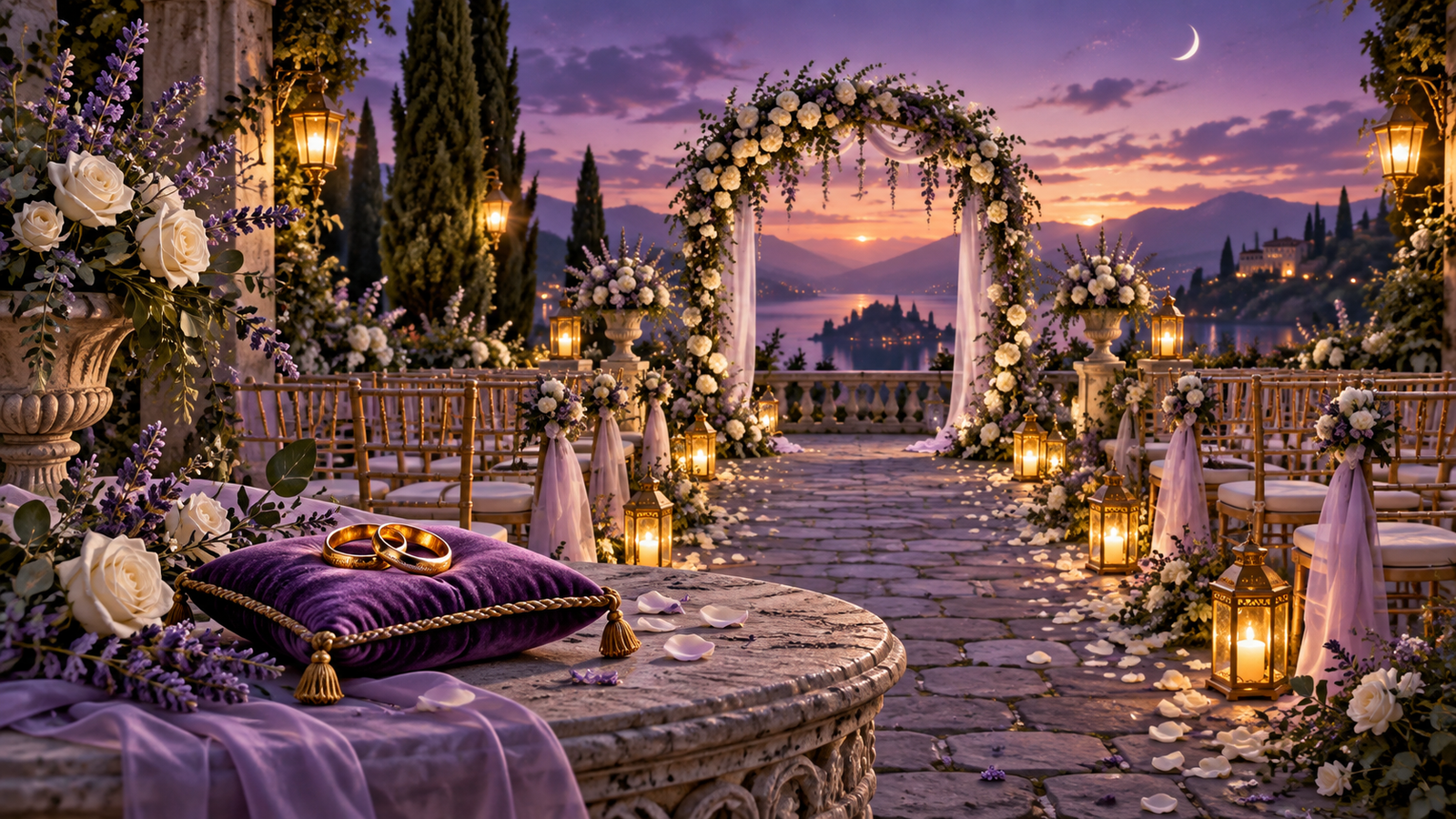
Music plays, chairs are arranged and a crowd looks in one direction. You may not yet understand why you are there. A wedding dream can hold celebration alongside visibility, belonging and taking on a role. A cheerful setting does not mean you shared its mood. Sometimes the most memorable detail is your own silence in the middle of other people’s excitement.
These readings are symbolic suggestions. The dream does not announce a marriage date, separation or another person’s feelings. Begin with your role: were you getting married, attending or organising? The same room can create very different stories from those positions. How you participated matters as much as whose celebration it appeared to be.
Your own wedding
When everyone looks at you, visibility and choice meet. Did being there feel welcome, or were you performing the role others expected? This question need not relate only to romance. The scene can invite reflection on a public decision or responsibility. Keep the comparison open rather than assuming the dream has identified one particular commitment.
If the person beside you was unclear, do not assign them a real identity afterward. The centre of the scene may be your position rather than a pairing. Clothes, the audience or the moment of saying something may be more memorable than a face. Use the actions and feelings you actually recall instead of completing the missing details.
Being a guest
Where you sat and whom you sought can make belonging noticeable. Finding a familiar table differs from being unable to locate your name. Were you part of the gathering or an addition to an arrangement made by others? These details provide a more personal beginning than the general image of a wedding celebration.
An invitation does not always feel pleasing. Attending unwillingly can create tension between courtesy and preference. This does not judge your actual relationships. It may help you think about how participation felt. Ask what you wanted from the occasion: closeness, acknowledgement or simply a comfortable evening. The hoped-for experience can clarify why the scene affected you.
Arriving late
Preparations refuse to end, the route lengthens or the clock behaves strangely. Trying to arrive may become more central than the wedding itself. What did you believe you were missing: the ceremony, a meeting or an assigned task? Different expectations can sit beneath the same delay. Calling every version a missed opportunity may be too narrow.
Remember the response when you arrived, if you did. If nobody noticed, your urgency differed from the atmosphere around you. If someone waited, consider how being expected felt. A dream delay does not establish that you will lose a real opportunity. It can leave a question about time and expectations without supplying a prediction.
Preparations and a missing detail
Tables, flowers, clothing or a small misplaced object may occupy the entire story. If everything had to be right, attention shifted from celebrating to managing details. Notice that change. Understanding what you were trying to complete may be more revealing than searching for a general meaning of weddings without considering your work inside the scene.
Did help make things easier, or did everyone ask something different of you? Preparation offers a setting for thinking about shared responsibility. A difficulty in the dream does not predict failure in a real plan. The space you had to respond to the missing detail may matter as much as the object itself.
Clothing that does not fit
A dress or suit that is tight, oversized or unfamiliar can make the difference between a role and comfort visible. Whom did you see in the mirror? An appearance you admired might still prevent easy movement. That contrast can invite reflection on how a position that looks suitable from outside feels from within.
Changing clothes, keeping them and accepting someone else’s choice are different actions. The dream does not force a decision. A smaller question may be enough: how much room did you have for your preference? Clothing in this scene is not only appearance. It also shapes movement and the way you can take part.
A silent or empty venue
Everything may be ready without anyone arriving. The scene can feel expectant, empty or unexpectedly peaceful. Recall the emotion that was actually present. Empty chairs do not have to mean loneliness; the absence of a crowd may have felt comfortable. A familiar association should not replace your own remembered response to the place.
Walking around, watching the door and sitting at a table create different continuations. If you knew whom you awaited, record that expectation. If you did not, avoid adding a name. An unspecified guest is not proof of a hidden person. Leaving the blank space open is also a careful way of respecting the dream.
Someone else’s wedding and mixed feelings
At a loved one’s celebration, happiness and a sense of distance may coexist. Celebrating change and missing an earlier form of closeness are not incompatible. You can consider the mixture of your feelings without treating it as knowledge about the relationship’s future. The dream does not show that the other person intends to leave you behind.
At an unfamiliar couple’s wedding, the setting may matter more than their identities. Did the crowd include you, or did you watch? Were you comparing yourself with others or simply being present? Your position in someone else’s scene may offer more material for reflection than trying to discover who the couple was supposed to represent.
A ceremony ending or remaining unfinished
The dream may stop before a promise is spoken, the music may end or everyone may move elsewhere. Do not complete an unfinished ceremony with an automatically negative outcome. Uncertainty can mark the limit of the remembered story. When the ceremony does finish, notice what follows: joining the crowd, seeking someone or spending time alone.
Moving into a quiet place afterward can resemble a shift from a public occasion to a private moment. Did your feelings change? Relief may matter if you had been uncomfortable during the celebration. If you did not want to leave, ask what felt good about staying. The final movement can give the earlier scene a different tone.
Making your own record
Write your role, what was expected, what you wanted and your final action. These four headings make a crowded scene easier to examine. Then consider recent ceremonies, photographs or conversations that provide personal associations. Not every detail needs a deep symbolic explanation. Sometimes the question concerns your place: did you choose it, or was it chosen for you?
Frequently asked questions
Does this mean I will marry soon? The dream provides no marriage date or reliable probability.
What if I did not recognise my partner? Preserve that uncertainty. Your role and feeling are more useful than inventing a missing face.
Is sadness at a wedding a bad sign? No. Mixed feelings can occur within celebration without determining future events.
Does arriving late mean losing an opportunity? There is no fixed conclusion of that kind. Consider time, expectations and the response when you arrived together.