
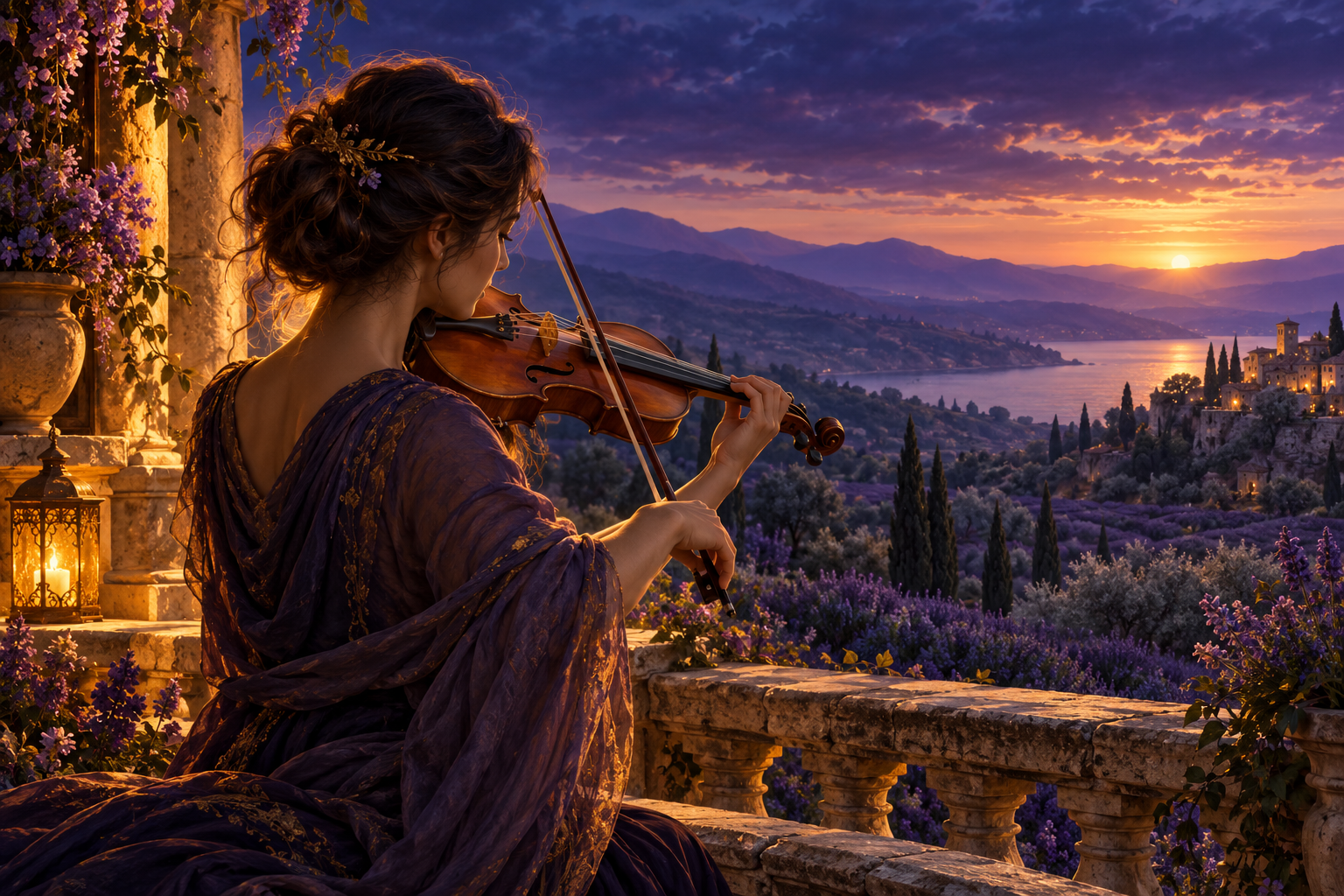
Playing Violin in a Dream: Expression and Emotional Harmony
Playing violin in a dream may picture a feeling seeking a route beyond ordinary words. Its fine sound can suggest desired closeness or wanting to make your own voice heard with care. Yet beautiful music does not promise that everything will improve, and a sad melody does not announce bad news. Your feeling and your freedom to play change the interpretation.
Did you know how, did someone ask you to perform, or were you most comfortable alone? In this symbolic Somnarya reading, harmony does not require pleasing everyone. Stopping midway, beginning again or playing only for yourself can also create room for an emotion to have a voice.
Playing violin in a dream — A quick guide to the scenes
| Scene | Symbolic theme |
|---|---|
| A flowing melody | Expression finding a form |
| Uneven or difficult notes | Permission to try |
| Learning to play | Another route for expression |
| Playing before a crowd | Visibility and wanting to be heard |
| Violin alongside singing | Different forms of expression meeting |
| Music accompanying dance | Giving rhythm a bodily place |
| A broken string or missing bow | A pause and the possibility of repair |
| Playing alone at home | A voice of your own |
A flowing melody
If the bow moved freely and the sound pleased you, something you wanted to express may have found a shape. Remember your enjoyment before the applause. Would you still have played without an audience? The gentler possibility is a feeling retaining value before anyone admires it. Neither artistic success nor a particular relationship outcome is promised by the scene.
Uneven or difficult notes
A sound unlike the one intended makes the distance between intention and result noticeable. Stopping immediately differs from trying again. Did someone actually laugh, or did you fear they might? Do not treat expected judgment as an observed response. An imperfect note can explore your relationship with practice inside the dream rather than establishing a lack of ability in reality.
Learning to play
Someone showing you the position may picture finding your way with help. Did the teacher then play the whole melody for you? Assistance and control can be separated. Never having played a real violin does not invalidate the scene. What matters is not a certificate of skill, but curiosity or pressure while trying something new within the imagined encounter.
Playing before a crowd
An audience can place the wish to be heard beside concern about evaluation. Before reading every face, notice your freedom. Could you choose the piece and stop when needed? No stage success is forecast. The scene may instead explore how it felt to remain yourself while attention rested on you, including whether the audience allowed the pace you wanted.
Violin alongside singing
Playing while another person is singing, or reversing those roles, can picture two kinds of voice finding room together. Could you listen, or did one overwhelm the other? Harmony need not mean doing the same thing. Different contributions can share a place. That offers an image of cooperation without verifying that you will unite with a particular person.
Music accompanying dance
When dancing accompanies the music, the scene may suggest experiencing a feeling rather than only considering it. Did the tempo suit you? Accelerating to match someone differs from moving at your own pace. Joy and wanting to step back can both belong. Do not force happiness into the scene; comfort and choice give the movement its individual meaning.
A broken string or missing bow
A broken string interrupting music may picture an expression stopping. One damaged part does not mean the melody is over forever. Looking for repair, waiting or continuing differently create separate endings. No breakup, death or misfortune is announced. Consider how you related to the interruption and what options remained, rather than deciding meaning from the break alone.
Playing alone at home
Alone in a house, playing may picture giving a feeling room without having to explain it. Did you lower the sound to avoid being heard, or open a door to share? Privacy and hiding are different. Relief after the final note may resemble having listened to yourself. Being able to remain in the silence matters alongside producing the sound.
The message to carry with you
The intimate question may not be whom to impress, but which feeling has had its volume turned down. If you cannot remember the tune, begin with the trace: ease, longing, shyness or delight. The same instrument can tell another story on another night. Personal interpretation comes from noticing the room your expression had, rather than treating music as a promise about what must happen next.
Frequently asked questions
Does violin playing announce love?
Closeness and expression may fit, without confirming a relationship or another person’s feelings.
Is a sad tune bad?
Not necessarily. Making room for sadness can feel easing; an emotion is not a news forecast.
Does poor playing mean failure?
No real outcome is established. Trying, expectations and being evaluated are possible themes.
Does a broken string mean separation?
No. Interruption, care and the possibility of beginning again can be explored instead.
What if I cannot play?
Your feeling and imagined attempt matter more here than your everyday musical skill.
Does the listener’s identity matter?
Personal associations matter, but the dream does not prove their real thoughts or feelings towards you.
This article offers cultural and symbolic interpretations, not predictions, health assessments or instructions for important decisions.