
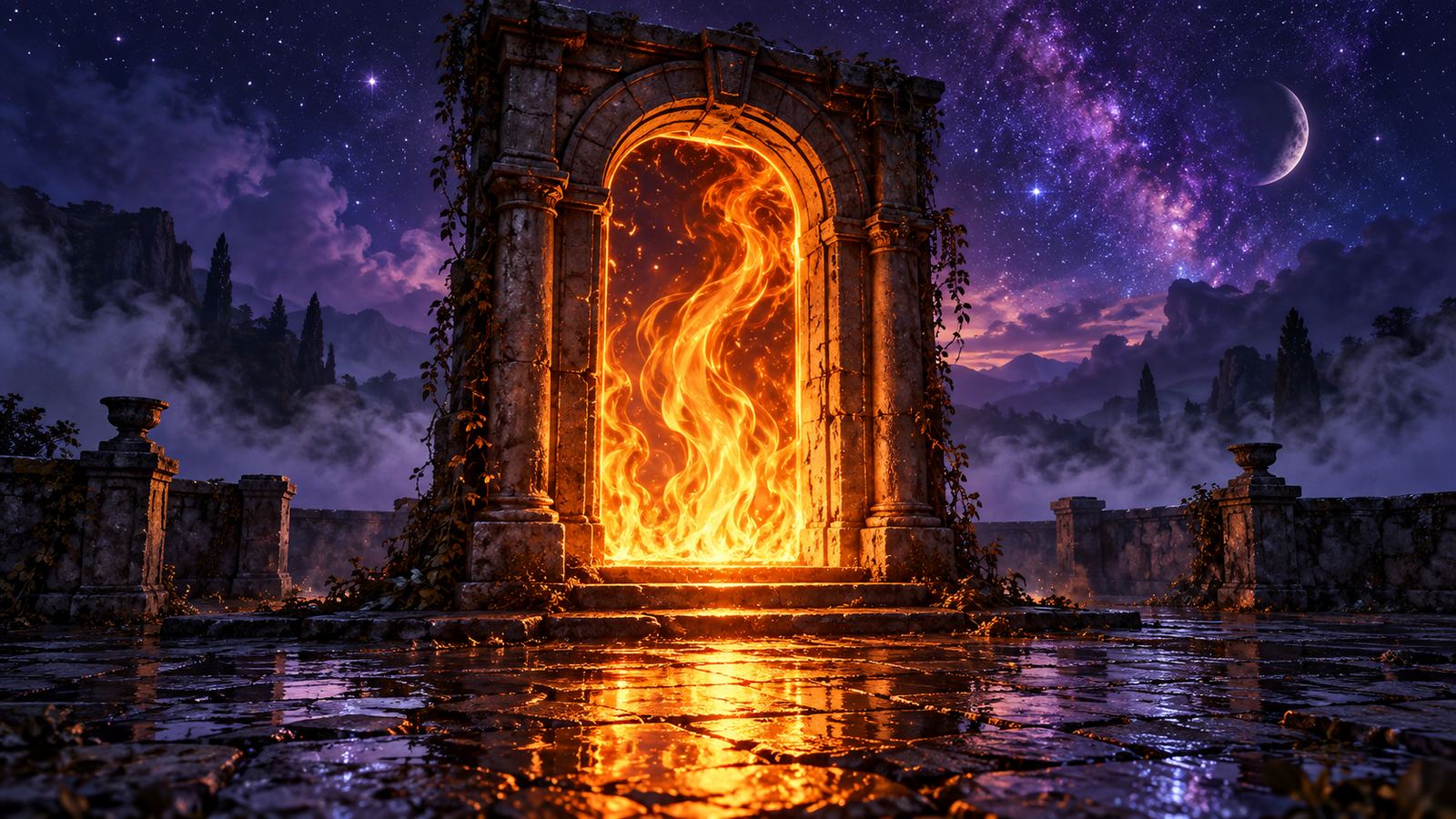
Fire Dream Meaning: What Remains Beyond the Flames?
The light changes the whole scene
You notice an orange glow. As it becomes clearer, you realise it is fire. A familiar place changes, and your attention turns toward a doorway, a person or something you do not want to leave. A fire dream can make the story move quickly. Yet the first dramatic image is not the whole experience. What you do afterward deserves equal attention.
The readings here are symbolic, not forecasts of a real fire or disaster. Consider the flames, your distance and your response together. Watching from far away differs from searching for a way out within the dream. These scenes are not instructions for handling a real emergency; they are ways of reflecting on a remembered experience.
Seeing fire from a distance
Watching from a hill or a window places you outside the event. Distance may feel reassuring or may strengthen the sense that you cannot influence what is happening. Was your own position familiar and steady? Did you want to approach or remain apart?
If you recognised the place, consider its personal associations. An unknown building and an old school may evoke different feelings. A familiar location does not announce that something will happen there. A more useful question is what the place carries in your memory and how that connection changed within the dream’s particular story.
A burning home
A home may gather familiar rooms, habits and a sense of belonging. If fire changes it, you might reflect on routines or a space you want to preserve. This comparison will not fit everyone. The dream house may be somewhere you have never visited; the feeling that made it yours can be important in its own right.
Which room held your attention? A photograph, table or doorway may create a more specific association than the whole building. You do not need to assign a symbol to every object. Sometimes one detail shows what mattered to you within the scene. Your attention may provide a clearer starting point than the general image of a house burning.
Searching for an exit
Moving between corridors or failing to recognise a familiar route adds orientation to the story. Alongside urgency, notice how choices appeared. Did someone point out a direction, did you find one or did the setting keep changing? Writing the sequence in order can clarify what you actually remember rather than merging it into a single moment.
Include reaching the outside if that happened. Continuing to run and stopping to look around are different endings. The feeling after the most intense part may differ from the initial fear. An interpretation focused only on danger can overlook the later movement of leaving, pausing or recognising that your position has changed.
Looking for someone or something
Calling for a particular person makes your priority visible within the dream. If you know them, your memories of the relationship may be relevant. It can instead invite reflection on the closeness or responsibility you experienced while looking for them.
If you searched for an object, ask why it mattered. Did it represent a memory, a period of life or a task rather than its material value? Finding it, leaving it and stopping the search are different actions. Describe how the choice felt instead of judging yourself afterward for whether you selected the supposedly correct thing.
Trying to put the fire out
Attempting to stop the flames gives you an active role. Were you alone or working with others? Could you see any effect? These details can support reflection on responsibility and shared effort. Keep the dream action separate from real-world instructions; the image does not establish how an actual fire should be handled.
If the flames did not stop immediately, the scene is not a verdict of failure. Its central feeling might be effort without a clear outcome. Asking for help or seeing someone take over can change the story. Consider the availability of support and your response to it, not simply whether your individual effort produced an instant result.
Flames without damage
Sometimes fire rises but nothing burns. Walls remain intact, or flames hover around a shape. That impossible feature may make the scene astonishing rather than threatening. Do not add damage afterward to make it more realistic. What made the dream unusual is a detail worth retaining, even if it resists an ordinary explanation.
You might consider intensity, attention or a wish for change as possible metaphors. There is no need to conclude that everything will be transformed. Keep the question smaller: what made you continue watching? The colour, warmth or unexpected location may matter. Curiosity itself can be part of the experience rather than something that must conceal another emotion.
Smoke and what you cannot see
Smoke reduces visibility within the scene. This may bring the feeling of acting without knowing the whole situation into focus. Following a sound, seeking a familiar point or waiting are different dream responses. They should be understood as parts of a remembered story, not recommendations for behaviour in a real event.
What was the first thing you saw when the view cleared? A door, open space or familiar face changes the earlier uncertainty. Rather than filling the unseen area with assumptions, focus on that first visible detail. Missing information does not automatically imply a hidden truth. It may simply mark the limits of what the dream showed.
After the fire has gone
The ending may become quiet. Ash, an empty room or an undamaged object deserves attention beyond the flames. Write what remained as well as what disappeared. Surprise, tiredness or adjusting to a changed setting may shape the final part of the experience.
If you began arranging something, the story had moved into what came afterward. Do not turn that transition too quickly into an optimistic promise. Stay specific: what did you touch first, whom did you seek, where did you stand? Small actions can show how you took a place in the scene again after its dramatic change.
Returning to your own details
Record the location, your distance, what you most wanted to protect and the final image. Then consider whether your feelings changed. A dream beginning with fear and ending in curiosity cannot be described fully by fear alone. Equally, beautiful flames need not be called positive if the experience felt uncomfortable.
A recent film or image may provide personal associations. You do not have to connect every detail to a major life issue. The remaining question may be what you wanted to hold, approach or leave when the setting changed. Look for an answer within your own experience rather than expecting the dream to establish a fact about the future.
Frequently asked questions
Does a fire dream predict disaster? No. It does not establish that a matching event will occur.
Does a burning home predict family problems? It cannot provide that information. Consider what the home meant within your experience.
Does putting it out guarantee success? No. Reflect on effort, support and the ending without making it an outcome promise.
What if I was not afraid? Keep that feeling in the record. Curiosity or calm should not be replaced by fear simply because flames were present.