
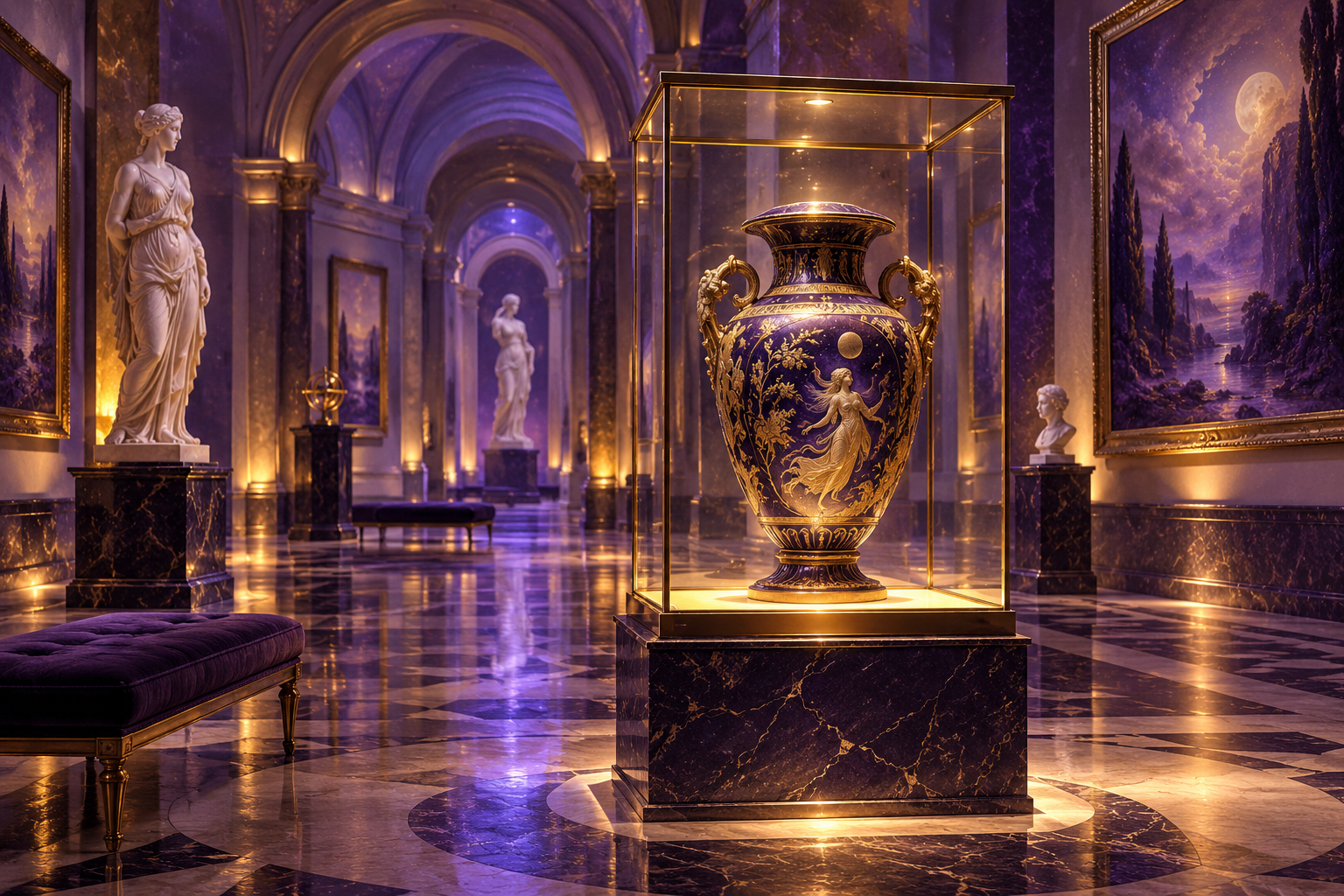
Museum Dream Meaning: Memory, Value and Distance
Museum dream meaning may invite reflection on preserving the past, recognising value and choosing a distance from an experience. In a museum, an object leaves ordinary use and becomes something presented. Seeing your own possession on display can therefore raise a question about how a personal story is told.
Imagine a familiar object behind glass with a description that does not match your memory. The issue may be who provides the account, not the age of the object. These readings are not historical evidence or confirmation of a hidden memory.
Museum dream meaning — A quick guide to the scenes
| Scene | Possible theme | Ask yourself |
|---|---|---|
| Examining old objects | Attention to value | Why did you stop here? |
| Your belongings on display | Presenting personal experience | Did the object still feel yours? |
| A closed gallery | Curiosity and limits | Could you ask for access? |
| Following a guide | An account and your perspective | Was there room for questions? |
| Getting lost | Many details and direction | Were you seeking an object or exit? |
| An empty case or changed exhibit | Expectation and revision | What did you expect to find? |
Examining old objects
Remaining before one object may suggest interest in a particular detail rather than the entire past. The crowd’s favourite need not be yours. Record where your own attention settled.
A dream cannot establish an artefact’s actual history. Remembered form, material and feeling offer more useful information than invented dates. What you wanted to know about it may be central.
Your belongings on display
A familiar possession exhibited publicly may suggest wanting a memory recognised or concern about privacy. Pride differs from feeling that something was displayed without permission.
Did the label feel accurate? Consider the difference between another account and your experience. The scene does not prove that someone is misrepresenting your past. Your right to add a description may explain the tension.
A closed gallery
A closed room may picture not yet reaching something of interest. Arriving early differs from a permanent prohibition. Describe the obstacle actually shown instead of assuming the entire museum was inaccessible.
Waiting, asking a guide and choosing another room create different continuations. Closure does not establish a suppressed memory or secret truth. It may concern the conditions of access within this scene.
Following a guide
A guide may suggest a viewpoint organising many separate pieces. Listening differs from surrendering your own observation.
Could you stop where you wanted? A group’s shared pace may not suit your curiosity. The guide is not verified authority about real history. Examine your opportunity to ask, pause and disagree. Guidance may be helpful without being the only possible account.
Getting lost
Moving between galleries may picture losing the initial question while exploring memories or information. Finding a new room with interest differs from urgently searching for the way out.
Were signs available? Seeking help differs from simply moving faster. Record the aim without judging your knowledge or predicting danger. The available route may have changed when curiosity became pressure.
An empty case or changed exhibit
An empty case may suggest an anticipated object not being where you expected. Preparation for a display differs from an item disappearing. First identify which stage the scene showed.
Did a replacement interest you? Value tied to one object differs from openness to another account. The image is not a report of theft or loss. It can show how you responded when an expectation required adjustment.
Touching or protecting an object
Touching may suggest wanting a closer experience than observation. Possessing, examining and protecting remain different intentions. Breaking a rule does not automatically represent freedom.
If something was damaged, did you ask for help or hide it? Dream damage does not predict an actual loss. Your response can make responsibility visible. Keep the remembered action distinct from any guilt you inferred later.
Leaving the museum
Leaving may picture revisiting the past without carrying its objects physically into the present. Keeping a thought, photograph or feeling differs from wanting to take the item itself.
Did you feel relief or plan to return? Neither necessarily means detachment or fixation. Identify the connection that remained at the ending. A meaningful visit can finish without requiring a complete conclusion about the past.
Compare admiring a vase and seeing the same vase as something taken from you. Appearance matches; belonging changes. Record the object, description, permission and final feeling. Alongside “What does the past tell me?”, ask “From which position am I telling this story today?”.
These interpretations offer symbolic possibilities for reflection, not predictions or psychological diagnoses.
Frequently asked questions
Does a museum tell me to return to the past?
No. Memory and value can be explored without an instruction to act.
Does a display reveal a hidden memory?
No. The dream cannot verify a forgotten event.
Is getting lost negative?
Exploration differs from wanting an exit. Aim and feeling matter.
Does the guide speak the truth?
A dream account is not verified historical authority.
Does an empty case predict loss?
Preparation, change and missing expectations are different possibilities.
What should I record?
The object, its description and your response. Do not invent unknown dates.