
Snow Dream Meaning: The Footprints Beneath the Silence
Everything is familiar, yet the view has changed
You open a window and the street you know has become white. Sounds seem distant, edges soften and yesterday’s obvious path disappears. A snow dream can create its atmosphere around this transformation. The same covering may feel restful to one person and isolating to another. The colour alone cannot tell you whether the dream felt hopeful, frustrating or uncomfortable.
The interpretations here are symbolic possibilities rather than forecasts. Your movement matters as much as the snow. Were you watching through glass, going outside or trying to arrive somewhere on time? Begin with that position before looking for a ready-made meaning. The distance between you and the weather is part of the story, not an incidental detail.
Snow falling slowly
Drifting flakes can make a scene feel unhurried. If nothing demanded immediate action, the image might invite reflection on rest, patience or allowing something to unfold. If you were waiting for someone while the snowfall increased, the same slowness could feel entirely different. A beautiful image can contain impatience without losing its beauty.
Remember what happened before the snow began. Silence after an argument is different from snowfall in a place where you were already alone. That moment of change may matter more than the weather itself. If the scene stayed the same throughout, consider how it felt to remain there rather than assuming an event must be hidden inside it.
Walking and leaving footprints
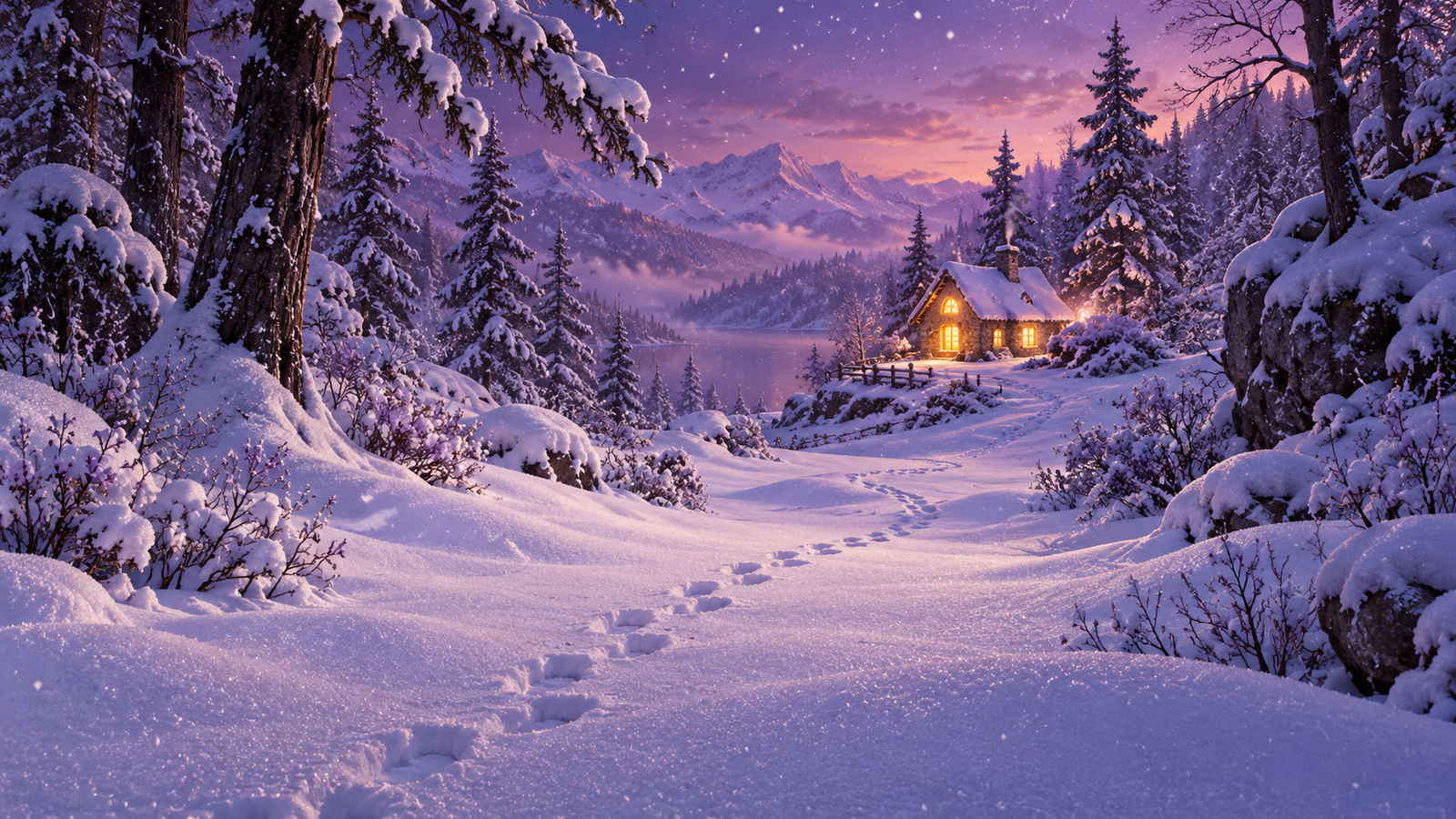
Each step can leave a visible record. This makes footprints a useful image for thinking about being noticed or leaving something behind. Wanting someone to see your tracks and trying to conceal them are different experiences. Looking back may involve curiosity, satisfaction or unease; the action does not have one fixed emotional meaning.
If another set of tracks appeared ahead, ask why you followed it. Did it make the route clearer, or lead somewhere you did not want to go? Following a path is not automatically wise or unwise. Whether you felt able to choose, stop or turn aside provides a more personal starting point for reflection.
Struggling through deep snow
When lifting your feet becomes difficult, a nearby destination can feel endlessly far away. The scene may place effort above distance. You might compare that feeling with ordinary tasks that look simple but require more energy than expected. This does not mean the dream has judged your abilities or predicted that you cannot make progress.
Notice what you were carrying. A heavy bag, responsibility for another person or a belief that you must hurry can change the whole walk. Snow may not be the only source of difficulty. Include any chance to rest, set something down or take another route. The story contains your available responses as well as its obstacles.
A road hidden by snow
Being unable to reach a destination can leave a strong unfinished feeling. Yet a blocked road need not be read as a final ending. Waiting, returning and looking for another passage are different responses. Give those responses as much attention as the place you hoped to reach. What you did after stopping is still part of the dream.
Ask what bothered you most: lateness, disappointing someone, being alone or losing control of the route. Similar scenery can hold very different personal concerns. If someone was waiting, their identity may connect with your memories, but it does not establish what they actually expect from you. Keep the dream relationship separate from claims about another person’s thoughts.
Watching from a warm room
A window creates distance between you and the weather. That distance may feel protective or may resemble being unable to join what is happening outside. Was the window open? Did you want to leave? Glass can function as shelter or as a boundary within the same kind of landscape.
If someone was beside you, distinguish comfortable silence from not knowing what to say. Quiet is not always peace, but it is not always disconnection either. The warmth of the room, the other person’s closeness and your freedom to leave can change the emotional tone. Do not make the outdoor view carry the entire interpretation.
Melting snow and disappearing tracks
A thaw reveals the road, earth or objects beneath the surface. Symbolically, this can suggest noticing what a covering had hidden. It does not mean a secret is about to be exposed. A dream supplies an image, not a timetable for real events. You can explore the idea of visibility without turning it into a prediction.
How did you feel when footprints disappeared? Losing a record might feel freeing or might resemble being forgotten. A clear path and muddy ground also create different endings. Describe the change in its specific form rather than calling every thaw renewal. What emerged, and whether you wanted to see it, help distinguish your particular experience.
Playing in snow or revisiting a winter memory
Snowballs, a snowman or a childhood street can add play and memory to the setting. Who was there, and did you want to participate? Joining willingly differs from being expected to enjoy yourself. An outwardly cheerful activity can contain mixed feelings. You do not have to choose the emotion that seems most appropriate to the picture.
A familiar winter may bring a particular period to mind. Did you want to return, or were you looking at it differently from the present? The appearance of the past does not declare that the whole period was good or bad. Fondness and sadness can share the scene. A personal reading can leave room for both instead of forcing a single mood.
Recording the dream
Write where the snow fell, how you moved and whether you felt warm or cold. Then separate what appeared from what disappeared. Was a road covered, a track preserved or a window illuminated? This helps identify how snow changed the scene rather than treating it as decoration. Add your final action, even if it was simply standing still.
Consider ordinary associations as well. A recent photograph or a remembered winter can matter without becoming a profound sign. A useful interpretation gives you space to think instead of demanding a conclusion. Perhaps the remaining question is whether the white landscape felt like room to rest or a place where you wanted to find your way again.
Frequently asked questions
Does white snow always mean happiness? No. Your feelings, position and freedom to move matter alongside the colour and appearance of the snow.
Does being trapped predict a real obstacle? No such forecast follows. You can reflect on effort, waiting or boundaries without expecting a matching event.
Is snow in summer a special sign? The contrast may make surprise central to the dream. Explore your association with that mismatch rather than assuming a universal message.